Ancestral Reflections (cont.)
As a spiritually minded somatic practitioner and a historian, ancestral work is a core dimension of my being. Recently, I traced my ancestral history back as far as I could 1000 years. As a result my definition of family is becoming rather expansive.
No one said that getting a PhD was easy. In fact, a professor of mine stated upon my arrival in Canada, as I prepared to read two hundred books on the history of medicine, the environment, and decolonization, “You will forget your entire life.” With those words hanging heavy on my mind, as someone who prides himself on having a rather interesting arc in his life story, I began to dig into the material. Over a year in, I thought “damn, he was right” as I couldn’t remember the names of streets that I had traveled for my entire life, and even forgot some of my favorite restaurants back in Charleston. I thought that some of this cultural amnesia had to do with having never moved in my life, but still, it was worrisome for someone whose job is based on memory. As I progressed in my new present clarity with haze around my past, it became easier to look backwards and reflect on society rather than my own interpersonal arc. I decided to trace my ancestry as far back as I could to place my family’s role into societal purview. I already knew that my mom’s family were abolitionists, but I was excited to find out that my dad’s family never enslaved anyone either. In fact, both sides of my family were fighting for the Union during the Civil War, as I wrote about in my Veteran's Day Ancestor Reflection back in November. I knew that didn’t necessarily mean that they held friendly attitudes towards enslaved men and women, but after having read their first-hand writings, I know that on both sides of my family, we saw the system of mass enslavement as wrong. My mom’s ancestors were even friendly with the natives in New York, Minnesota, and North Dakota.
Day 1 in Saskatoon with no idea what lays ahead
If you haven’t dived into the whole ancestry rabbit hole, you should try. Who knows what you might find out about your family’s role in history? Even before I provided any personal information (only my name and email address), I had traced my family back to an Edward Taylor (an important ancestral name), born in 1649 in Kent, England, who died in 1710 in British Colonial New Jersey. The interesting thing was that it said he was “christened” in 1662. Given that the English Renaissance is not my historical forte, I wanted to know why Edward was baptized at 13. Interestingly, I found that the Book of Common Prayer was banned in 1645, leading to the decline in traditional Anglican baptisms. This led to baptism being performed with consenting adults rather than infants, a practice known as “believer’s baptisms.” I was starting to understand the fervent Christian nature of my mom’s family as I dug deeper. Envisioning my ancestor colonizing the new world in 1664 at 15, two years after being baptized(this information is based on an unverified source and suggests that he was in the very first wave of colonists; other sources suggest it’s more likely 1680 or later that he arrived). I had to know…When did my family get to Kent?
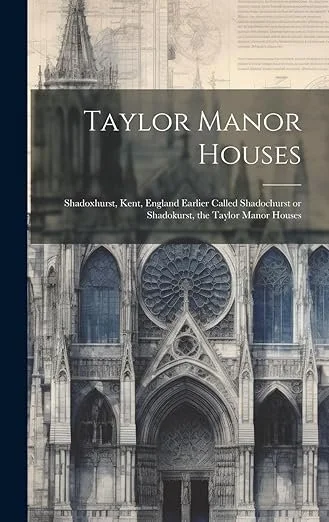
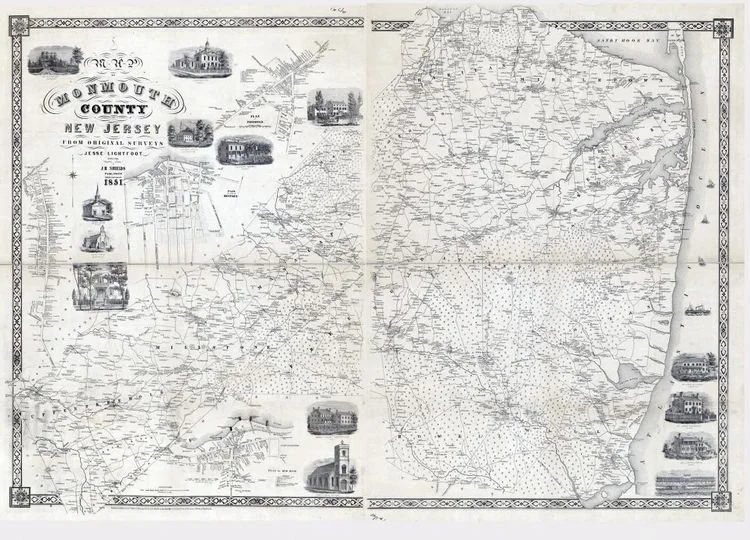
Tracing the line backwards, I quickly found we had been there for a while. The Taylor family was quite prominent in Kent, and I even found a book titled “Taylor Manor Houses; Shadoxhurst, Kent, England, the Taylor Manor Houses” published in 1937. Looking into this narrative, not every Taylor was well off, and several of those I am directly related to were born to low means and rose to high status in their lifetimes. Visiting one of these homes would have been like visiting your financially better-off uncle’s house. I wanted to know if any of this wealth was acquired through selling humans and any potential involvement in the Trans-Atlantic Slave Trade. While I found no records that my family was directly involved in the trade, I still wondered how their status in the colonies benefited them, as the Indigenous inhabitants were being cleared from the land. Settling in Monmouth County, the family became influential landowners and local leaders. Edward followed his inheritance. His father, John Taylor was born in 1611 and died in 1683. He had been a significant member of the nobility, appearing in official documents recording the gentry in “Visitations of Kent”.
I was itching to know when the family’s sense of social justice began and how it was instilled in my abolitionist third great-grandfather. Seeing my family’s connection to the Tudor dynasty, I wanted to know more. Reading about John’s history was when I discovered my family’s connection to the “Taillefer” Legend. My former state senator grandfather, Bill Taylor, always said his dad told him that we Taylors were descendants of Norman conquerors, not the English. What strange irony I felt, sitting in a Canadian university studying concepts of decolonization, only to discover how integral modes of colonization were to my family's history. Reading that the Taylors of Kent claimed descent from a legendary Norman knight, Baron Taillefer, who died in battle fighting alongside William the Conqueror at the Battle of Hastings, had me extremely intrigued. Who was this figure I had never heard of?
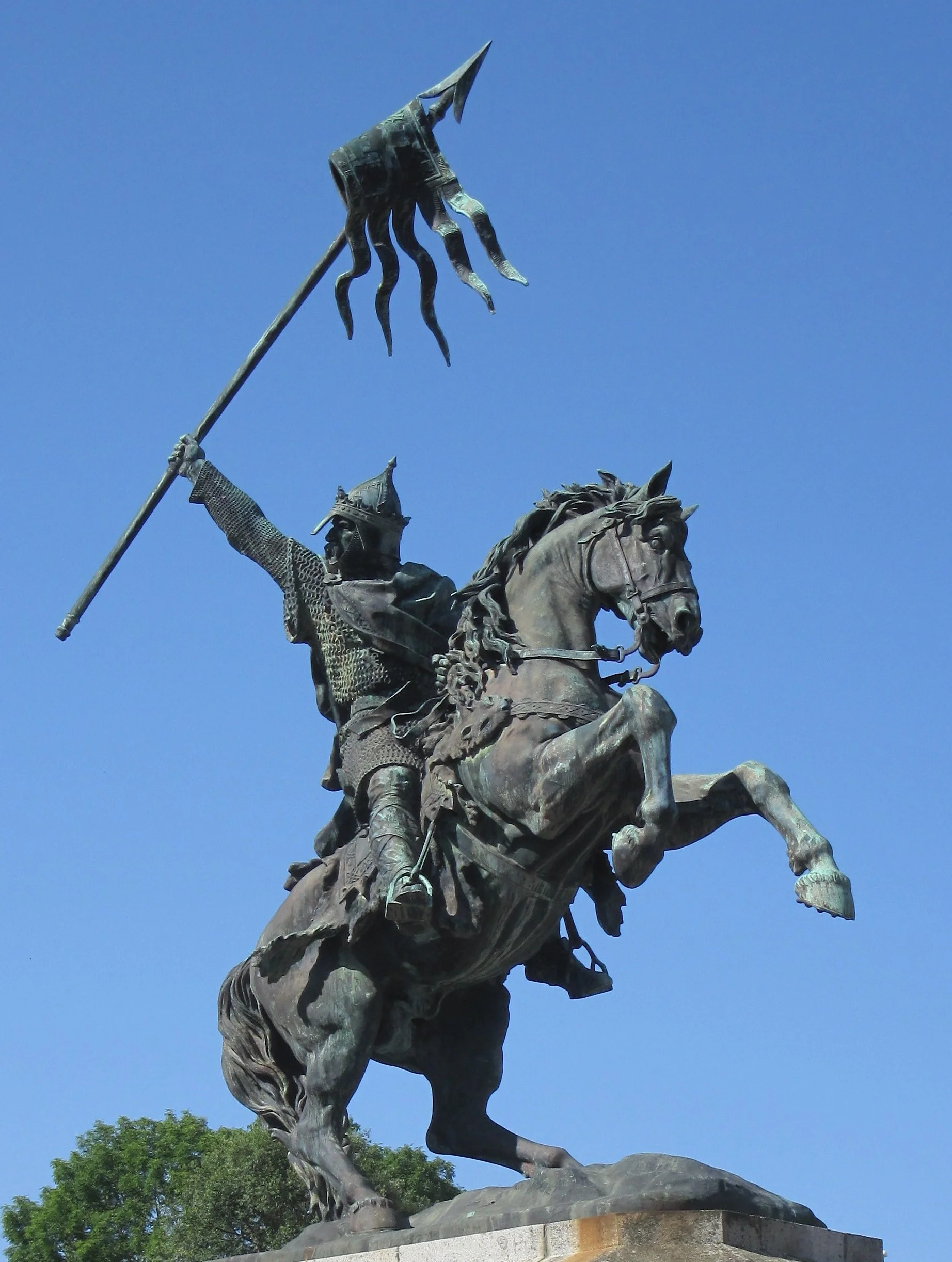
William the Conqueror
Before getting to the Taillefer legend, there was another Taylor that had me really intrigued. This was John Taylor, born in 1480. John was the oldest of a set of triplets born to William and Joan Taylor in the Forest of Needwood in Barton, Staffordshire. Henry VII, King of England, upon a visit to the forest took an interest in this miraculous birth and the survival of these three children in the 15th century. He subsequently decided to support the children’s education. John Taylor studied to become a priest and a diplomat, before serving Parliament and holding the office of Master of the Rolls from 1527 to 1534. He subsequently funded the building of a church in the region, and today, a local high school is named after him. Growing up I was obsessed with the Hobbit and the writings of JRR Tolkien(specifically the Shire descriptions in Fellowship) like many the musically inclined white male youth in the line of Marc Bolan and Robert Plant. During World War I, when Tolkien was recovering from his illness he wrote some of his first mythological stories in Staffordshire inspired by the landscapes.

Cottage in Needwood forest like where John would have been born and found by Henry VII
As I sat, trying to memorize all these different historical ideas, I recognized that this work was woven into the fabric of my DNA. John Taylor looked over charters, patents, and records of the Court of Chancery, his court dealt specifically with cases of “equity” where the common law didn’t cut it. John was pressured out in 1534 by the infinitely more famous Thomas Cromwell. Cromwell would become Henry VIII’s chief minister and the very architect of the English Reformation. You can watch a stylized version of this history in the 2007-2010 Tudors show.
Following the lines back further and further, I was amazed to see more Johns and Williams demonstrating the ancient power of my name, William Taylor Rowe. In moving from the 14th to the 13th century, the records indicated that my family was still in England, but our last name was Taylifer. I had found the pre-anglicized name and the first name was Hanzer. Hanzer Taylifer was born sometime at the advent of the 14th century. My family was transitioning from their Norman-French roots to become influential English landholders. My Grandpa Bill was right…We were Norman conquerors. This shifting surname marked the firm root of the Taylor family in Shadoxhurst, Kent, by 1305. I wondered what a minor knight like Hanzer Taylifer would have done in the 14th century and what kind of man he would have been. Was he an asshole to his tenant farmers or was he fair when he held his manor courts to settle local disputes? With few records from this time, I found myself wondering if there were seeds of 19th-century abolitionism in 14th-century manor courts. Had Hanzer Taylifer exercised power with restraint? Or was the family’s 18th-century turn to social justice a reaction to hearing stories of being the conqueror, akin to the ones grandpa Bill told us?
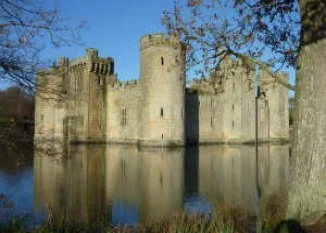
Shadoxhurst Kent I can’t wait to visit. Now I understand why I loved King Arthur growing up
It’s in the 13th century that tracing the exact members of my family becomes hard, but what is clear is that we were significant landholders in France before accompanying William the Conqueror in the Norman Invasion of 1066. The surname Taillefer means “He who cuts iron”. The legend is that Taillefer was a Jongleur or a juggler a sort of minstrel knight whose purpose was to entertain as well as fight. Several 12th-century medieval, Norman-French, and Latin sources record this incident, highlighting its actuality. Considering the Taylor manor homes that are still standing today in Kent, the fact that my family immigrated to the New World in the 17th century, and that I’m alive, suggests that this legend is true. Combining the views of Taillefer from various primary sources including Wace’s Roman de Rou, written in 1160-1170, denoting his singing of Chanson de Roland or the Song of Roland before the Battle of Hastings in 1066, with the Carmen de Hastingae Proelio, written 1067-1070, depicts him asking to cast the first strike and killing the first English soldier. Taillefer himself was then killed in battle, and my family became prominent landowners in Kent, England.
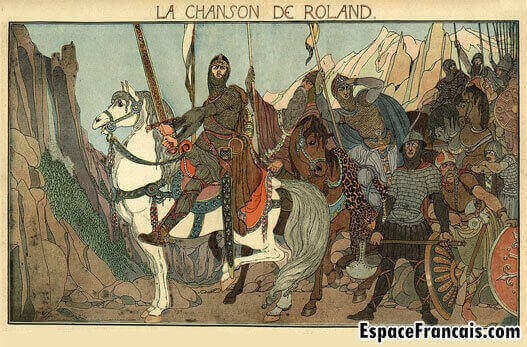
The Song of Roland at the Battle of Hastings
I believe that my Taillefer family ancestors arrived in what was then Gaul in 58 BCE on the heels of Julius Caesar to the core of my being, but I don’t have enough evidence to rant about it. So while I might not remember the names of all my favorite restaurants in Charleston, and as the cobblestone streets slowly fade from the center of my mind, I’ve paved a highway back to 1066. I feel very much like John Taylor, Master of the Rolls, working on this PhD. He dealt with “equity”, ideas of fairness, and where laws failed humans, and that’s where my work with the history of medicine picks up the pieces.
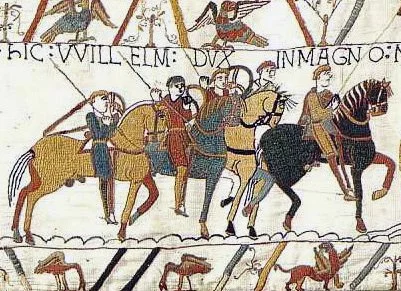
William the Conqueror and Company the Bayeux Tapestry
Peace and Love Ya’ll,
Follow your ancestry, listen to yourself, dream, and fight hate with all that you do.
William Taylor Rowe
Listen to the Song of Roland here
https://www.youtube.com/watch?v=MXWgoKP1AOU&list=RDMXWgoKP1AOU&start_radio=1